


Producer Sentiment Slips Due to Rising Policy Uncertainty
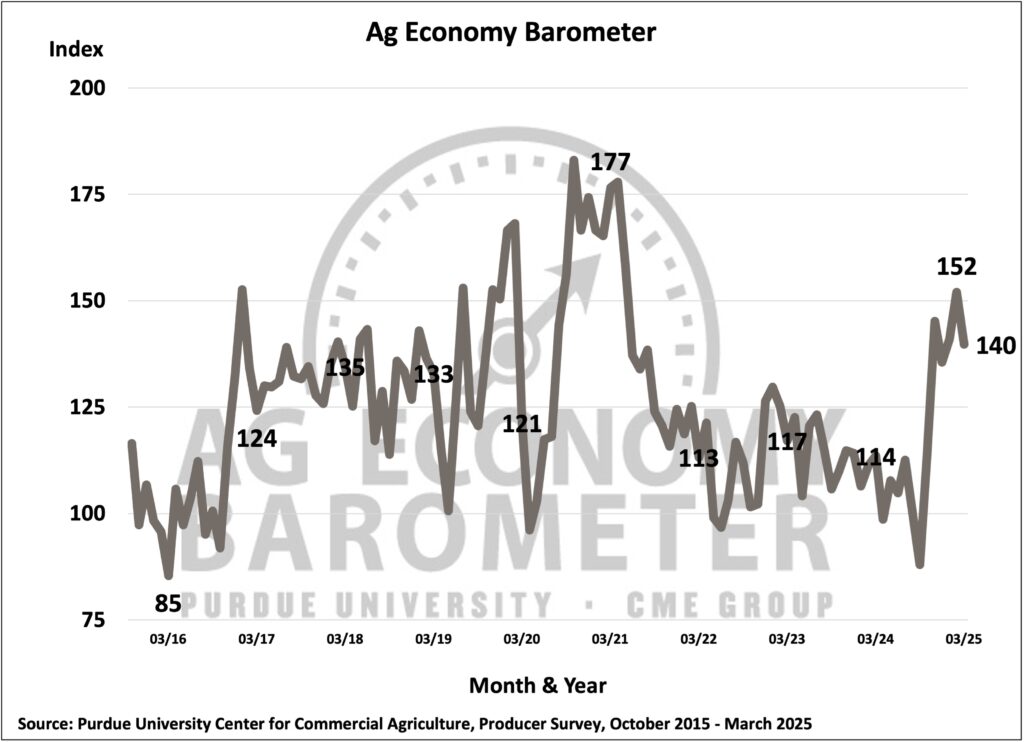
Farmer sentiment聽declined in March as concerns over agricultural trade and farm policy weighed on producers鈥� outlook for the future. The 聽fell 12 points to a reading of 140, down from 152 a month earlier. Contributing to the weakened sentiment聽in March was a 15-point drop in the Index of Future Expectations聽to 144 and the Current Conditions Index聽falling 5 points to 132. The drop in sentiment聽was influenced by falling crop prices since mid-February, along with increasing uncertainty surrounding agricultural trade and farm policy.
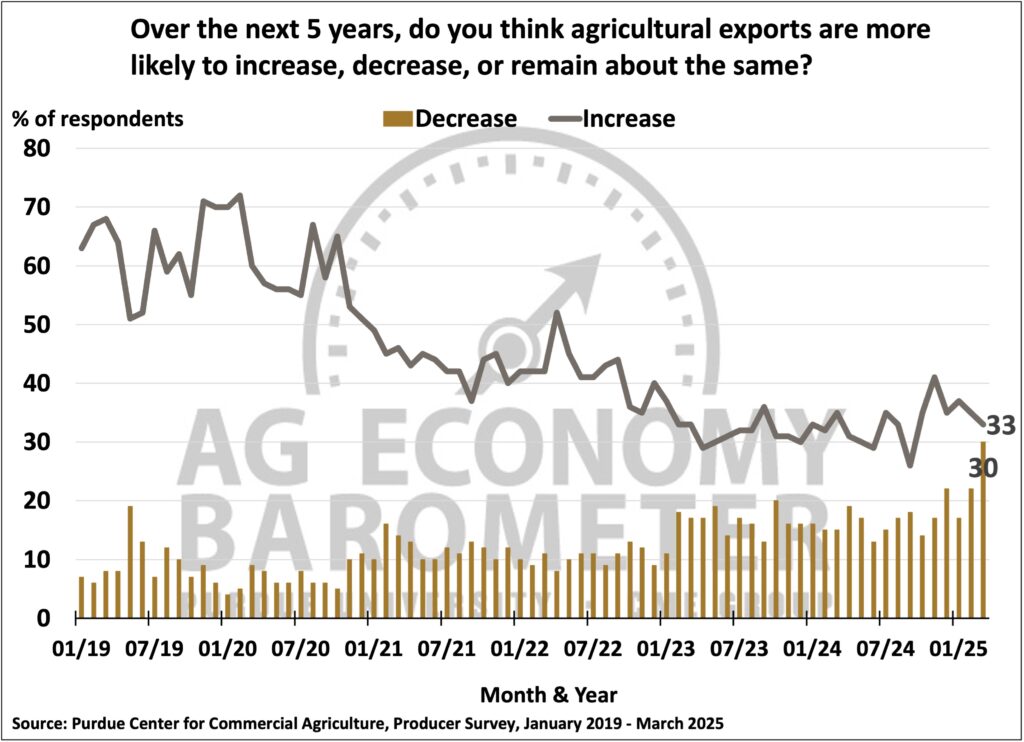
U.S. farmers are concerned about the future of U.S. agricultural exports and trade policy. Since 2019, barometer surveys have included a question that asks producers about their expectations for U.S. agricultural exports over the next five years. Historically, exports have been an important source of demand for U.S. agricultural production, and strong exports have often been associated with strong farm incomes. In 2019 and 2020, producers were optimistic that exports would grow over the upcoming five years, but that optimism began to erode in 2021 and has continued to fall since that time. In March, producers鈥� expectations for U.S. exports in the next five years reached an all-time low in barometer surveys, with the percentage of producers who expect to see exports fall (30%) nearly matching the percentage of producers who expect to see exports rise.
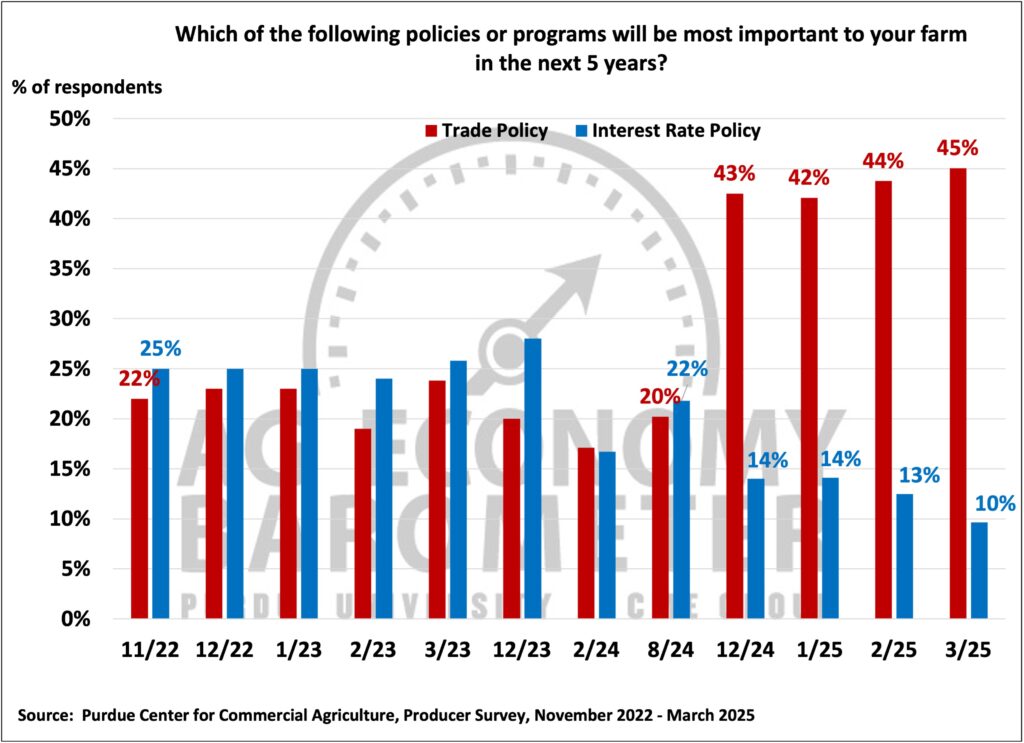
Since late 2022, barometer surveys have periodically included a question that asks respondents which policies or programs will be most important to their farm in the next five years. Prior to the November 2024 election, farmers in our surveys reported that they were more concerned about interest rate policy than trade policy. Since the November election, concern about trade policy has skyrocketed, with 43% of respondents, on average, citing it as the most important policy or program affecting their farm. That compares to an average of 13% of farmers since the election who pointed to interest rate policy as most important.
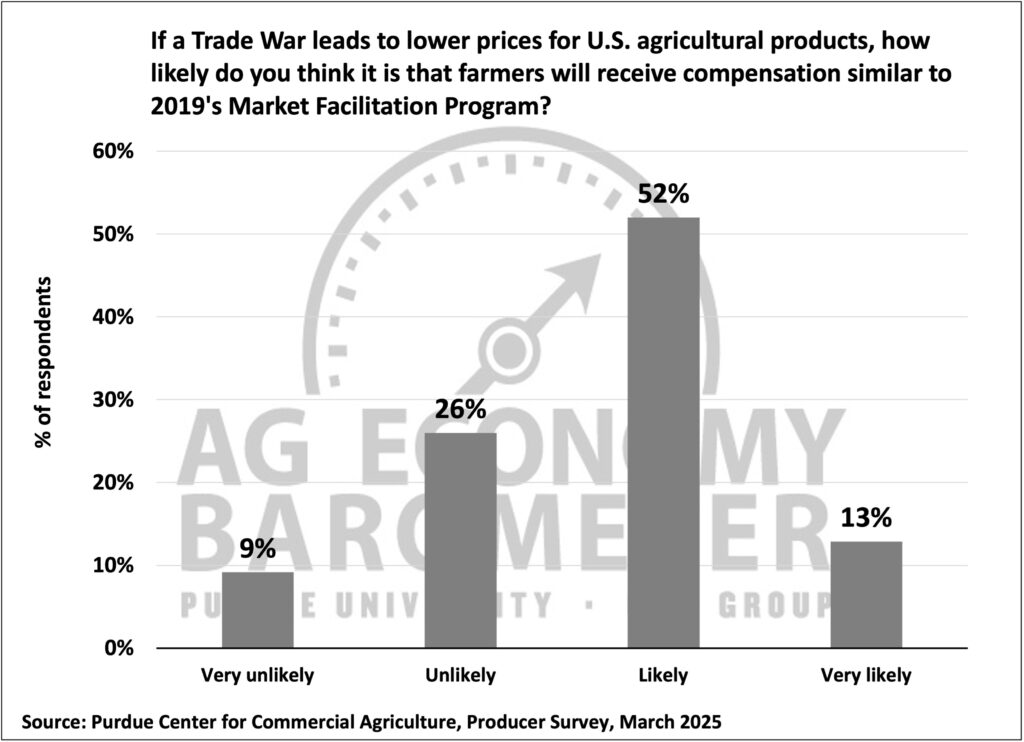
Coinciding with concerns about trade policy and the impact on U.S. agricultural exports is the potential impact on farm income. The March survey included a question that asked farmers about their expectations regarding the likelihood that a program similar to 2019鈥檚 Market Facilitation Program (MFP) would be available to compensate for lower output prices attributable to a trade war. Nearl two-thirds (65%) of respondents said they think a follow-up to 2019鈥檚 MFP program would be either 鈥渓ikely鈥� (52%) or 鈥渧ery likely鈥� (13%). In a related policy question, 74% of farmers in March said that passage of a new farm bill this year was either 鈥渧ery important鈥� (49%) or 鈥渋mportant鈥� (25%) to them.
Source: