


Farmer Sentiment Improves in January
U.S. farmers retained their post-election optimistic outlook at the start of the new year as the January聽Purdue University-CME Group Ag Economy Barometer Index聽rose 5 points above a month earlier to a reading of 141. The barometer鈥檚 rise was primarily attributable to a 9-point rise in the聽Current Conditions Index,聽while the聽Future Expectations Index聽rose just 3 points. Compared to recent surveys, fewer producers this month pointed to lower crop and livestock prices as a top concern, which helped explain why producers felt better about the current situation. The shift in attitudes was attributable in part to an improvement in crop prices from the time of the December to the January survey.
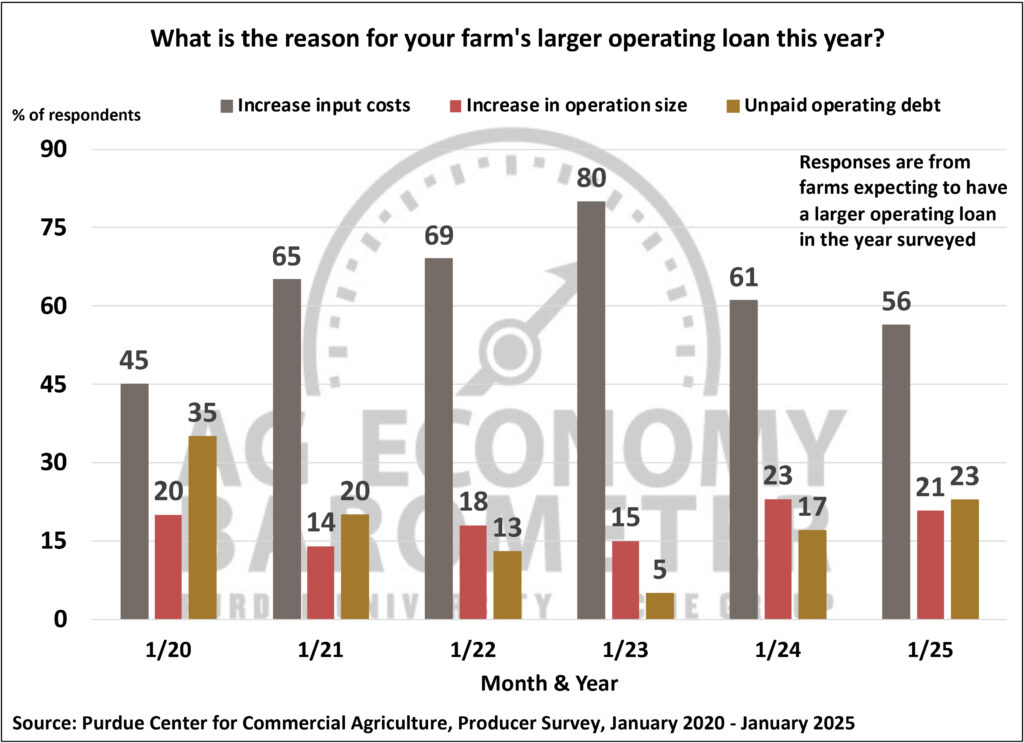
Since 2020, each January barometer survey has included questions about farmers鈥� operating loans for the upcoming year. The percentage of respondents who said they expect to have a larger operating loan this year compared to a year ago rose to 18%, up slightly from last year鈥檚 15%. In a follow-up question, producers who expect to have a larger loan were asked why their loan size was increasing. This year, 23% of farmers who expect their loan size to increase said it was because they were carrying over unpaid operating debt from the prior year, up from 17% last year and just 5% two years ago. The shift is reflective of the decline in farm income, particularly crop income, that has taken place in the last two years and could be an early sign that financial stress among producers is increasing.
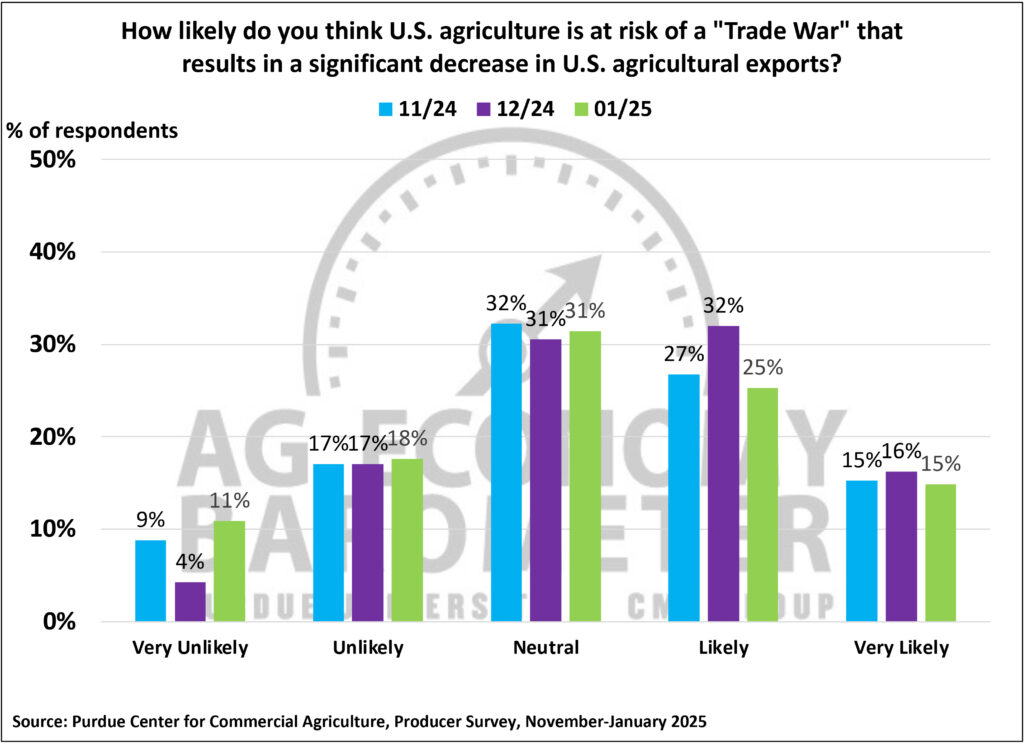
The future of agricultural trade is on many producers鈥� minds. When asked in January which policy or program will be most important to their farm in the next five years, 42% of respondents chose 鈥渢rade policy,鈥� which was more than double the percentage who chose 鈥渃rop insurance program.鈥� Unsurprisingly, there is significant concern among U.S. farmers that a trade war could break out that negatively impacts U.S. ag exports, although attitudes did appear to shift from December to January. Over the last three months, the percentage of U.S. producers who think a trade war is either 鈥渓ikely鈥� or 鈥渧ery likely鈥� has ranged from a high of 48% in December to this month鈥檚 low of 40%. Meanwhile, the percentage of producers who think a trade war is either 鈥渦nlikely鈥� or 鈥渧ery unlikely鈥� rose to 29%, up from 21% in December.
Wrapping Up
Farmer sentiment remained strong at the start of the new year, rising modestly from December to January. Farmers reported an improvement in current conditions on their farms due in part to increases in crop prices from early December to mid-January. Farmers expect conditions to improve as the聽Future Expectations Index聽remains well above the聽Current Conditions Index. U.S. producers expect 2025 to be better than 2024, as the聽Farm Financial Performance Index聽is at its highest level since late 2021. However, producers are concerned about the future of agricultural trade, with over 40% of respondents citing 鈥渢rade policy鈥� as the most important policy for their farm in the next five years and 40% of producers saying that they think a trade war is either 鈥渓ikely鈥� or 鈥渧ery likely.鈥�
Source: