


Farmer Sentiment Drifted Lower in December
Farmer sentiment drifted lower in December as the聽Purdue University-CME Group Ag Economy Barometer聽fell 9 points to 136. Although the barometer weakened somewhat in December compared to November, producers still retained much of their post-election optimism about the future.
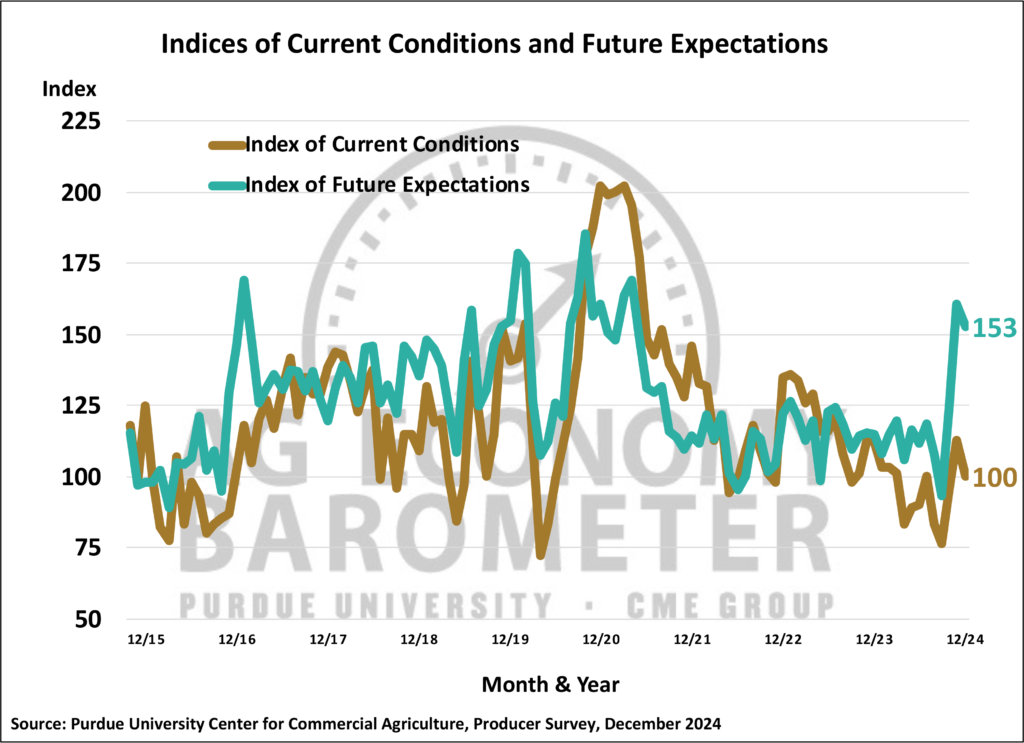
罢丑别听Index of Future Expectations聽dropped just 8 points to 153, leaving that index 59 points higher than in September and 29 points above the October reading.
罢丑别听Index of Current Conditions declined 13 points to 100, indicating that producers鈥� appraisal of current conditions in U.S. agriculture and on their farms is weaker than their views regarding the future. Despite this month鈥檚 decline, the聽Current Conditions Index聽remains 24 points above its September low and 5 points higher than in October. Optimism about the future appears to be motivated primarily by producers鈥� expectations for a more favorable policy environment in the years ahead.
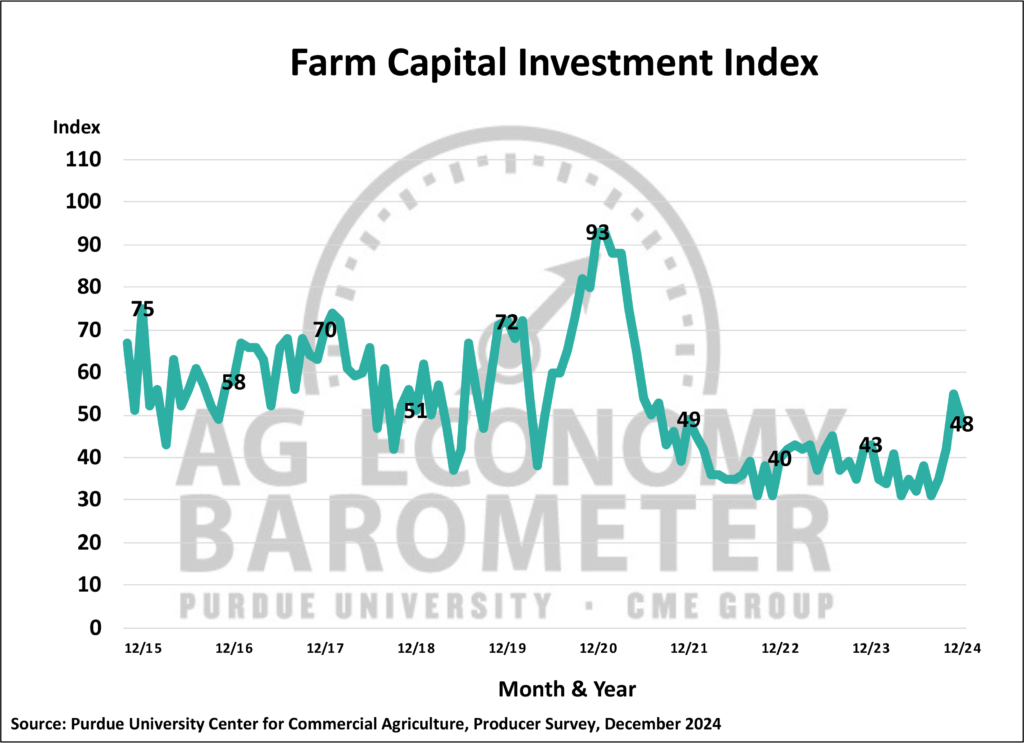
The Farm Capital Investment Index fell 7 points in December to a reading of 48. This month鈥檚 decline came on the heels of a 13-point rise in November. The percentage of respondents who said it鈥檚 a good time to invest declined to 17% compared to 22% a month earlier, while the percentage of farmers who said it鈥檚 a bad time for investments rose slightly to 69%, up from 67%. The investment index鈥檚 decline mirrored that of the Farm Financial Performance Index, which fell 8 points in December to 98.
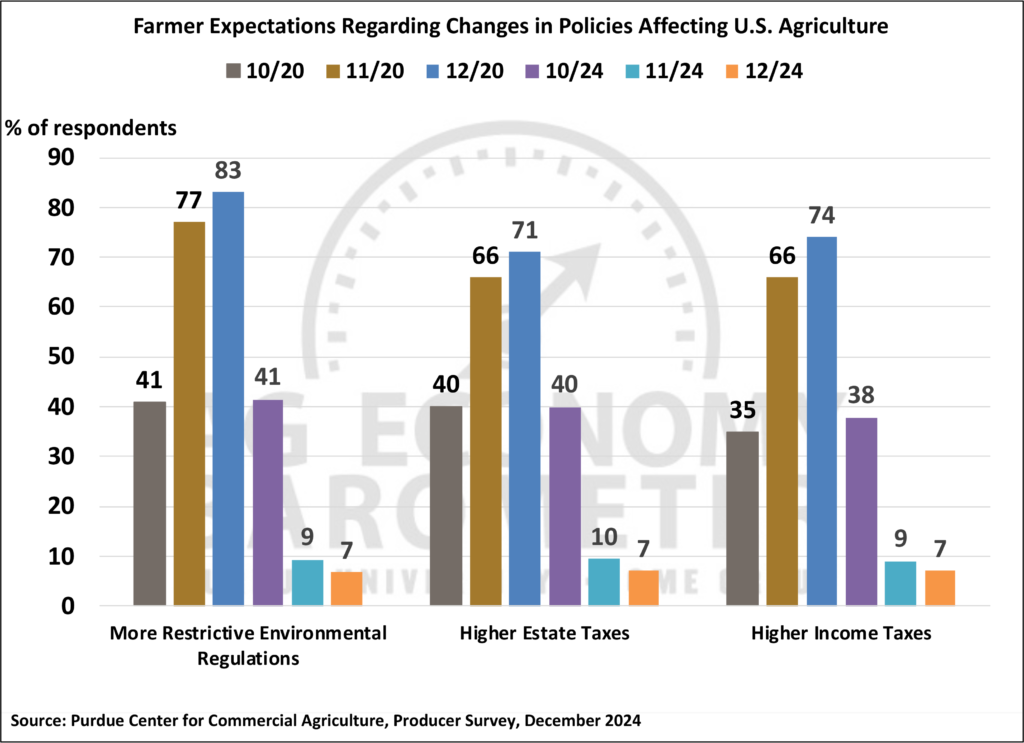
Farmers鈥� future outlook for their farms and the agricultural sector remains noticeably more positive than at the end of summer. The drivers behind producers鈥� improved outlook for the future appear to be expectations for policy shifts following the November 2024 election. Expected policy shifts include environmental, estate and income tax policies.
Prior to the election, over 40% of producers said they expected to face more restrictive environmental regulations over the next five years. Following the election, less than 10% of producers said they expected a more restrictive regulatory environment.聽聽Before the election, 40% of farmers in our survey said they expected estate taxes to rise in the future. After the election, fewer than 10% said they look for estate taxes to rise within the next five years.
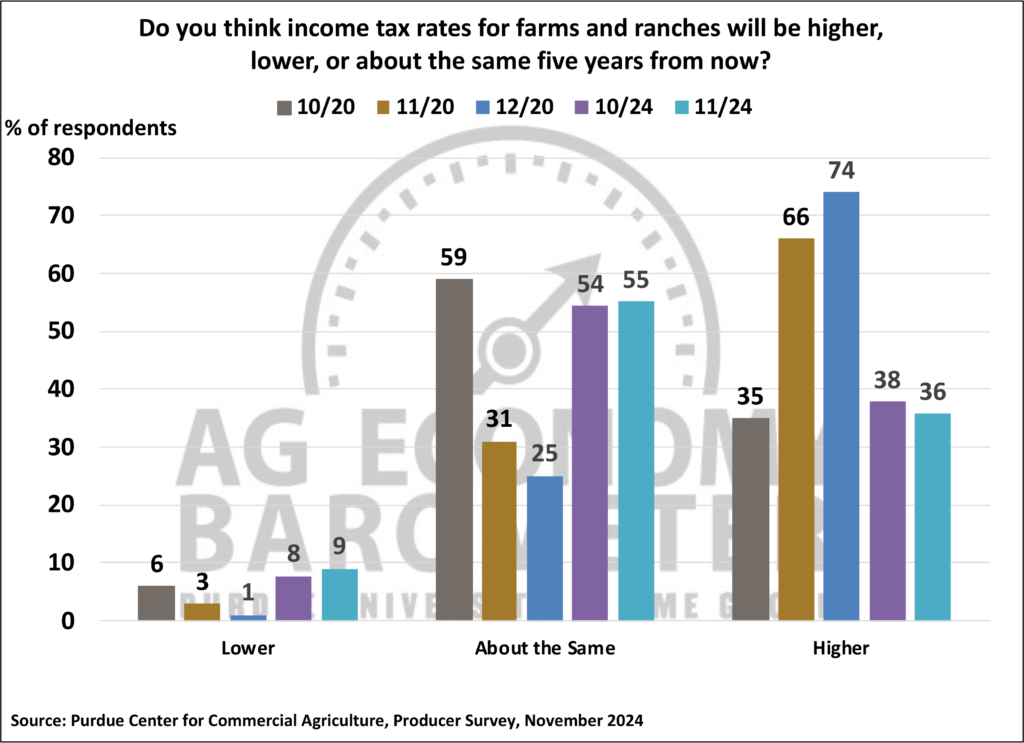
Additionally, leading up to the election, nearly four out of ten (38%) producers said they expected income taxes to rise in the future. Following the election, that percentage also fell below 10%. Finally, over half (55%) of respondents to the December survey said they expect the fall 2024 election outcome to lead to a stronger farm income safety net than was in place prior to the election.
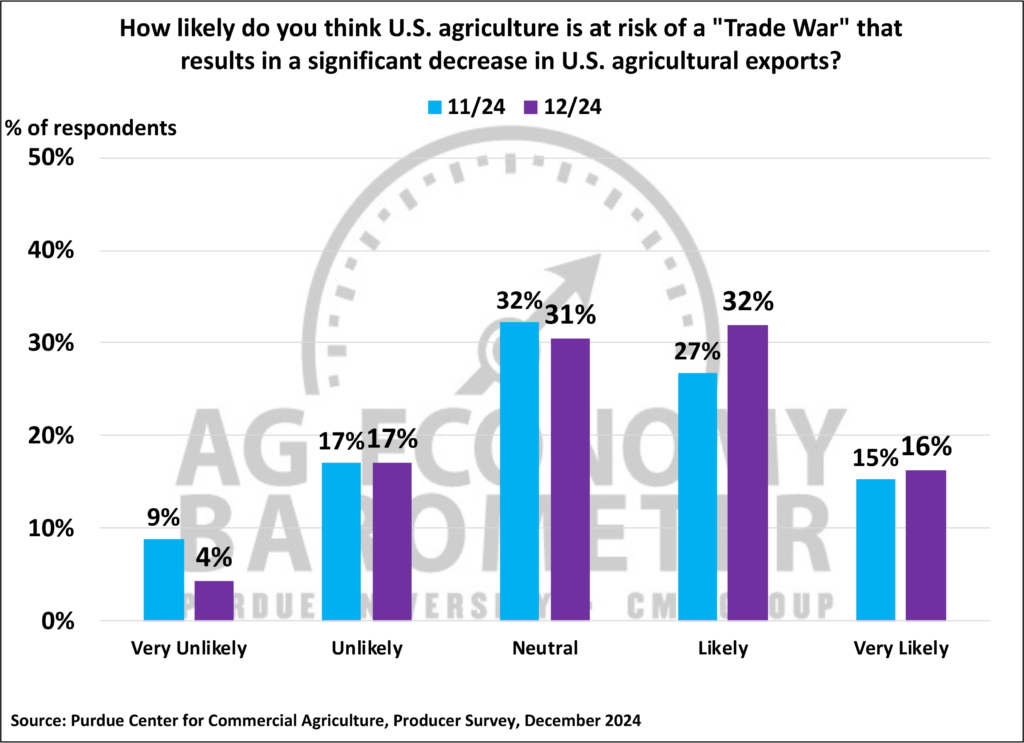
One area of concern for U.S. farmers continues to be the future of international trade in agricultural products. Both the November and December barometer surveys asked producers about the likelihood of a 鈥漷rade war鈥� breaking out that has a negative impact on U.S. agricultural exports. Results reveal that many producers are concerned about this possibility. In December, 48% of farmers said they think a 鈥渢rade war鈥� that negatively impacts agricultural exports is either likely (32%) or very likely (16%). That鈥檚 up from 42% of respondents who felt that way in November. On the other end of the spectrum, just 21% of December鈥檚 respondents said that a 鈥渢rade war鈥� was either unlikely (17%) or very unlikely (4%). That鈥檚 down from 26% of farmer respondents who felt that way in November. Finally, when asked which policies or program will be most important to their farm in the next five years, 鈥渢rade policy鈥� emerged as the top choice in December, selected by 43% of producers, with 鈥渃rop insurance program鈥� trailing as the second-most common response at 17%.
Source: